

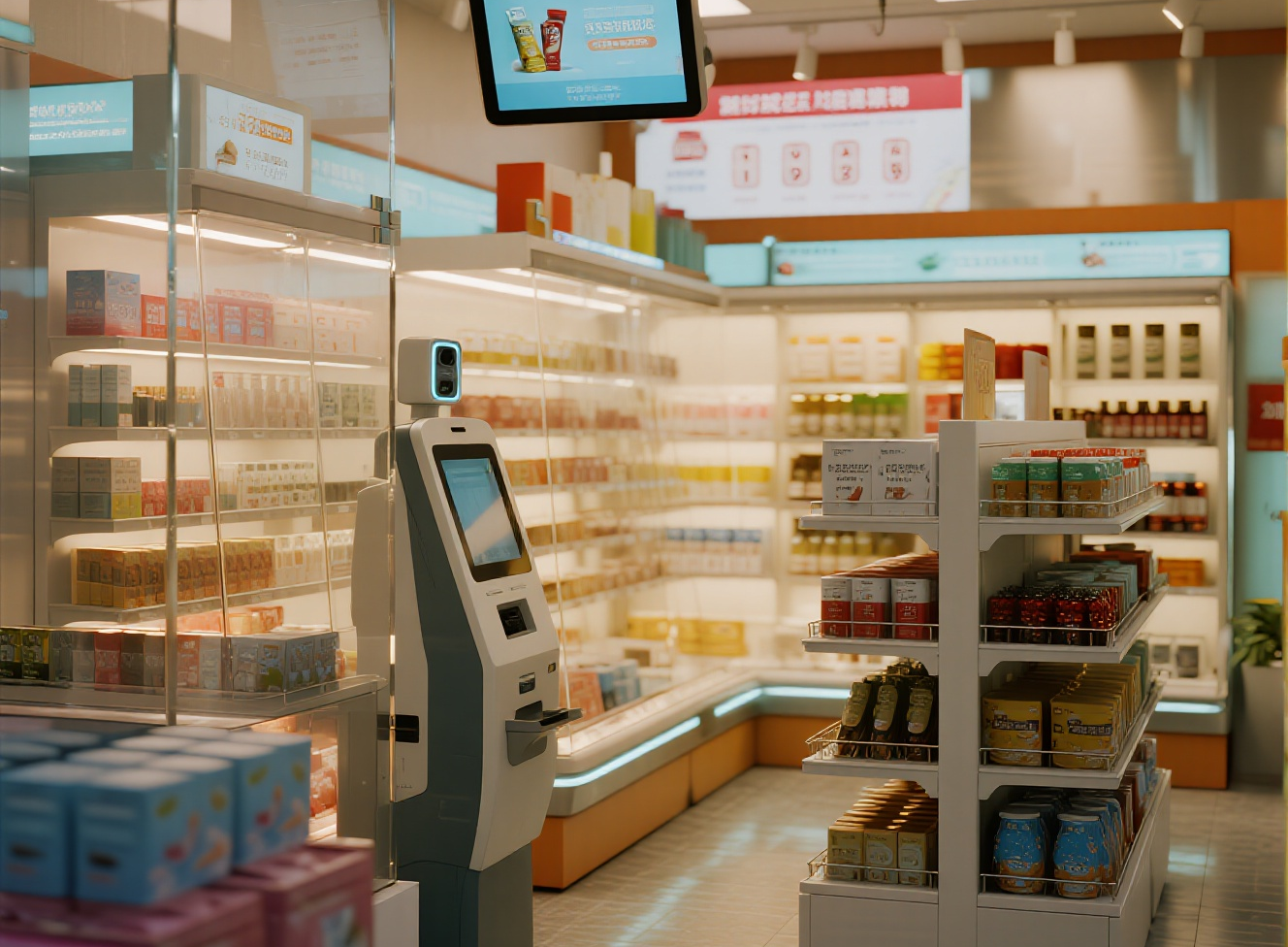
Imagine a retail model where one staff member can remotely monitor and manage multiple stores at the same time, regardless of location. No shift schedules, no cashier lines, and no “closed” signs—just 24/7 operations powered by automation. This is not science fiction; it is the reality of unmanned retail, a transformative business model combining self service kiosks, artificial intelligence, and IoT to redefine how consumers shop.
The Core Advantages of Unmanned Retail
Significant Labor Cost Savings
Traditional supermarkets require multiple staff per shift for checkout, stocking, and security. Unmanned stores drastically reduce this dependency—one trained operator can oversee several locations via centralized monitoring, cutting labor expenses by up to 70%.
Round-the-Clock Operation
With no need for shift changes, stores can remain open 24/7, capturing late-night and early-morning sales opportunities and increasing revenue per square meter.
Data-Driven Inventory and Sales
Integrated self service kiosks and AI sensors track inventory in real time, enabling precise stock replenishment, reducing waste, and improving turnover rates.
Improved Customer Experience
Automated checkout eliminates queues, while touch-free payment systems reduce transaction time to mere seconds.
Loss Prevention and Accuracy
AI-powered cameras and automated billing reduce human error and deter theft, ensuring greater operational accuracy.
Flexible Location Strategy
Without the constraint of staffing availability, unmanned retail stores can be set up in locations with lower rent or limited human resources—such as industrial parks, residential communities, or transportation hubs.
Global Market Landscape
The unmanned retail market is expanding rapidly worldwide. According to industry research, the global market was valued at approximately USD 7 billion in 2024, with a projected compound annual growth rate (CAGR) of over 30% in the coming years.
However, the speed and scale of adoption vary significantly by region.
Why China is Leading the World
China has emerged as the global leader in unmanned retail, for several key reasons:
Mature Technology Ecosystem – Seamless integration of AI vision systems, RFID, IoT devices, and edge computing enables highly reliable unmanned store operations.
Universal Mobile Payment Adoption – Alipay, WeChat Pay, and UnionPay QR codes make cashless transactions effortless for all demographics.
High Consumer Acceptance – Young urban consumers embrace self-service shopping, accelerating market penetration.
Rapid Deployment Capability – From community grocery stores to large shopping complexes, Chinese operators can roll out hundreds of unmanned outlets in a matter of months.
Major players such as Hema Xiansheng (Freshippo), 7Fresh, and JD Daojia have demonstrated how unmanned retail can scale successfully while maintaining customer satisfaction.
Other Countries: Catching Up at Different Speeds
United States – Amazon Go and Amazon Fresh pioneered “Just Walk Out” technology, but expansion remains cautious, with most locations concentrated in select cities.
Europe – Brands like Tesco GetGo (UK), Żabka Nano (Poland), and Carrefour Flash (France) are experimenting with cashierless formats, but most remain in pilot stages.
Japan – Driven by labor shortages and aging demographics, chains like Lawson and FamilyMart are rolling out unmanned convenience stores, aiming for significant expansion by 2025.
The Role of Self Service Kiosks
Unmanned retail is only possible through robust self service hardware, including:
- Entrance authentication kiosks for facial recognition or QR code scanning.
- Smart shelf and weighing stations for automatic inventory tracking.
- Self-checkout kiosk with multi-payment compatibility.
- Backend integration linking hardware with retail management software for real-time operations.
High-quality manufacturing and reliable system integration ensure these devices can run 24/7 with minimal maintenance—critical to the unmanned retail business model.
Future Outlook
The next phase of unmanned retail will go beyond simple automation:
- AI-powered personalization for product recommendations and targeted promotions.
- Digital twin store models for advanced operational simulations.
- Hybrid retail ecosystems combining unmanned stores, vending machines, and smart pickup lockers in a single network.
With its mature supply chain, strong manufacturing base, and advanced technology infrastructure, China is positioned to not only dominate its domestic market but also export its unmanned retail solutions globally.
Conclusion
Unmanned retail offers more than cost savings—it represents a complete transformation of the retail operating model. By reducing staffing requirements, maximizing uptime, and leveraging real-time data, this model promises higher profitability and operational resilience. While the concept is taking root worldwide, China’s rapid adoption, integrated technology, and consumer readiness place it firmly at the forefront of the global market.