

Managing a kiosk project from the initial prototype to full-scale mass production is a complex journey — one that requires precision, planning, and process discipline. For international buyers looking for reliable kiosk suppliers, the difference often lies in how well a manufacturer can manage this transition.
At Meiding Industrial, we have implemented structured workflows and strict quality standards to ensure that every kiosk — from the first sample to the thousandth unit — meets expectations.
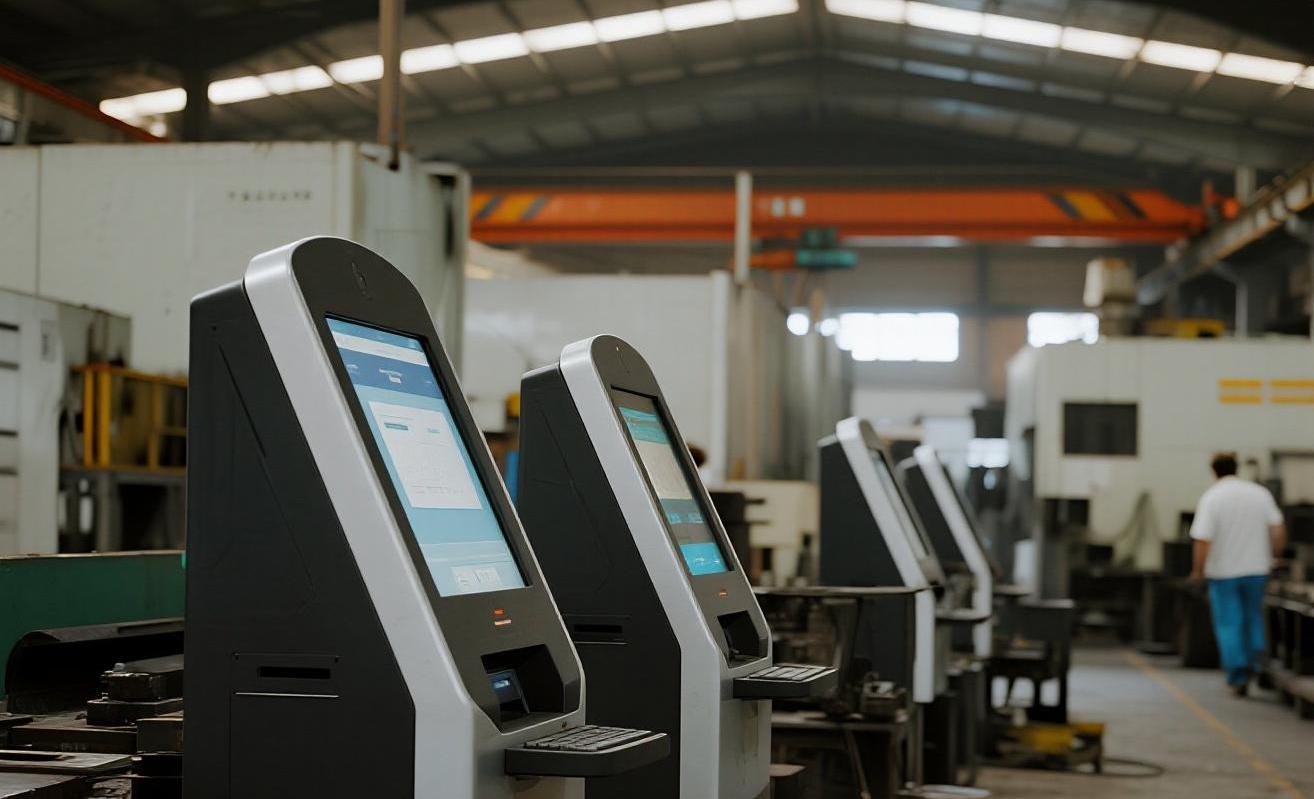
Stage 1: Turning Ideas into Functional Prototypes
The success of any self service kiosk project starts with a clear and actionable prototype phase. At this stage, communication, engineering, and flexibility are critical.
To support fast development without disrupting mass production, we’ve established a dedicated prototype workshop. This allows our R&D team to:
-
Rapidly build custom samples and test new kiosk features
-
Work closely with clients to refine form, structure, and user experience
-
Run small batch production separately from the main line
This separation helps minimize delays and ensures that your pilot units are ready for field testing before entering the mass production pipeline.
Stage 2: Process Optimization Before Scaling Up
Once the prototype is approved, we move into pre-production. During this phase, we:
-
Finalize CAD designs and optimize the Bill of Materials (BOM)
-
Conduct pilot production to identify and resolve assembly or quality issues
-
Collect real-time feedback and adjust processes accordingly
This is where quality planning makes the most impact. A well-executed pilot run saves weeks — if not months — later on during large-scale manufacturing.
Stage 3: Efficient and Scalable Mass Production
Transitioning to mass production involves more than just increasing output. It requires precise project coordination across departments, including:
-
Engineering documentation and version control
-
Production scheduling and material readiness
-
Consistent training for assembly and QC teams
At Meiding, we separate small-batch production from bulk assembly lines, which allows us to maintain efficiency while supporting custom orders.
Implementing 7S for Factory Discipline and Quality Control
To ensure clear, efficient, and clean production lines, we have fully adopted the 7S management system:
-
Sort: Remove unnecessary items to maintain focus
-
Set in order: Create logical, visual workflows
-
Shine: Keep the workspace clean and organized
-
Standardize: Maintain best practices across departments
-
Sustain: Regular training and reviews
-
Safety: Build a culture of proactive safety awareness
-
Spirit: Foster team ownership and continuous improvement
By integrating 7S into every aspect of production, we ensure consistency and accountability — which translates directly into better product quality and delivery speed.
Quality Assurance at Every Step
We don’t just inspect the final unit — we build quality into every stage:
-
Inline inspections during sheet metal fabrication, painting, assembly, and system integration
-
Separate QC protocols for samples vs. mass production
-
Digital traceability, allowing us to track materials and performance batch by batch
With this full-process quality control, clients can count on stable, long-term performance — whether it's a single kiosk prototype or a fleet of 1,000 units.
From Sample to Shipment — A Seamless Experience
At Meiding Industrial, we believe that kiosk manufacturing is not just about hardware — it's about trust, clarity, and efficiency throughout the project.
By separating sample and mass production, enforcing 7S, and maintaining rigorous quality controls, we provide peace of mind to clients across the globe.
Frequently Asked Questions
What are the advantages of setting up an independent sample making workshop?
Answer: An independent sample making workshop can speed up customization and development without affecting the main production plan. It can improve the efficiency and quality of samples and batch orders.
How does 7S management improve the production of self service kiosk?
Answer: 7S management ensures cleanliness, standardization and safety in the factory - all of which help to improve the consistency of product quality, reduce errors and shorten delivery time.