

In modern self-service kiosks, the touchscreen is the primary interface between users and the device. While regular consumer-grade screens can suffice for occasional home or office use, they often lack durability in high-traffic public or industrial environments. Industrial-grade touchscreens are designed to withstand frequent use, harsh conditions, and prolonged operation, ensuring reliable kiosk performance. This article explores the technical factors that make industrial-grade touchscreens superior, covering materials, structure, touch control chips, environmental resilience, and maintenance longevity.
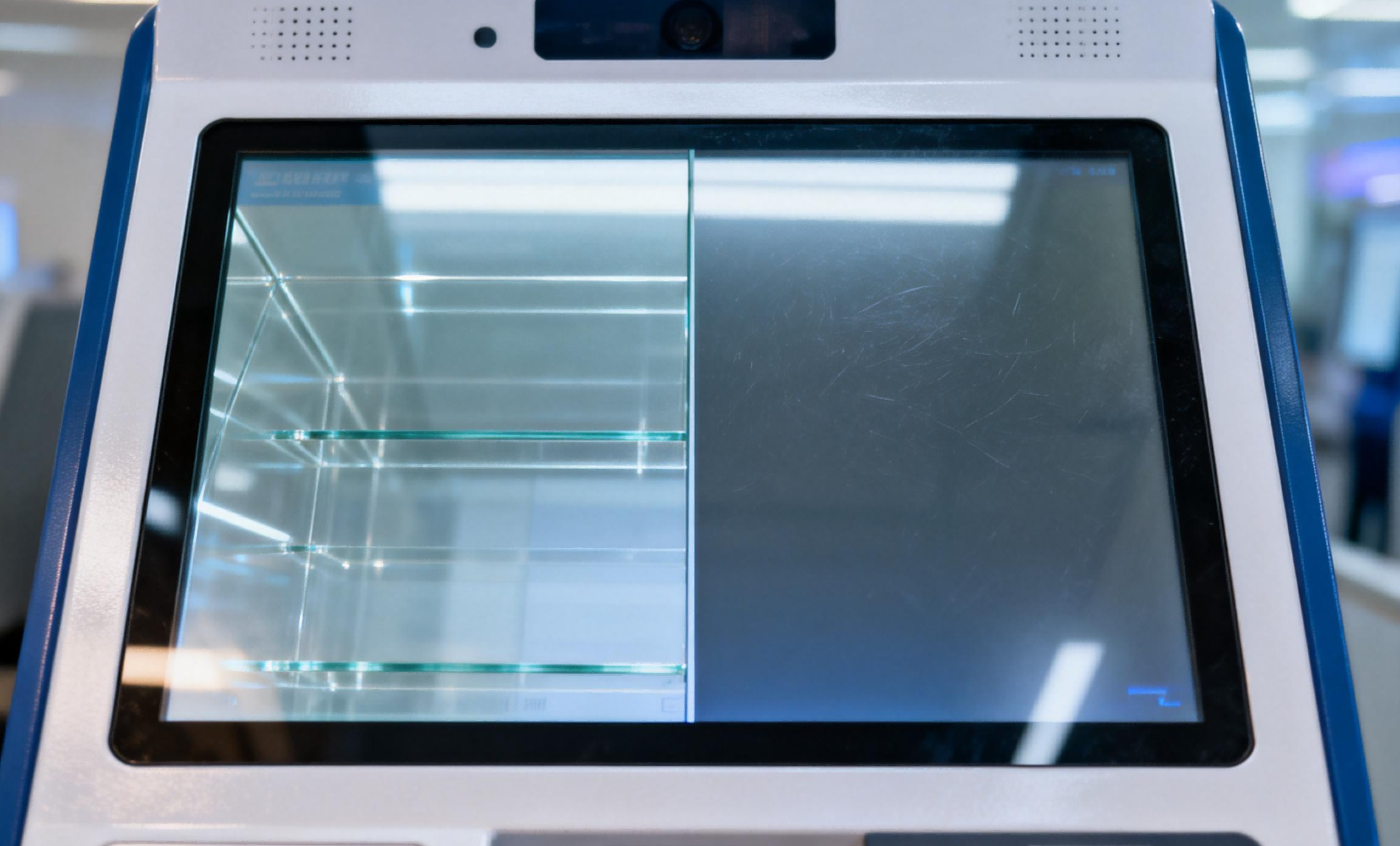
1. Materials and Structure – The Foundation of Durability
1.1 Reinforced and Tempered Glass
Industrial touchscreens typically use Gorilla Glass or high-strength tempered glass with thickness ranging from 5 to 7 mm. This provides superior scratch resistance, impact resistance, and long-term robustness compared to standard consumer screens.
1.2 Anti-Fingerprint and Oleophobic Coating
The screen surface is often treated with anti-fingerprint and oil-resistant coatings, keeping the display clean and maintaining touch sensitivity and smooth operation over long-term usage.
1.3 Modular Design and Full Lamination (OGS)
Modern industrial touchscreens often feature One Glass Solution (OGS) full lamination, bonding the touch layer and display layer directly. This reduces dust accumulation, improves optical clarity, and enhances touch accuracy. Modular designs also facilitate easy replacement, lowering downtime and maintenance costs.
2. Environmental Resilience – Built for High-Traffic and Harsh Conditions
2.1 Dust and Water Resistance
Industrial touchscreens often meet IP65/IP66 protection standards, preventing dust and liquid ingress. This makes them ideal for Public Service Kiosk deployments, outdoor self-service terminals, and other environments with frequent user interaction.
2.2 Wide Temperature and Humidity Range
These screens can operate reliably between -20°C and 70°C, with stable performance even in high humidity or rapidly changing environments, whereas consumer-grade screens are usually limited to 20–25°C.
2.3 Shock and Vibration Resistance
The touchscreen and kiosk frame are often engineered with shock-absorbing structures, reducing the risk of drift, malfunction, or permanent damage from frequent touches or accidental impacts.
3. Touch Control Chips and Logic – The “Smart Brain”
3.1 Industrial-Grade Capacitive Touch Controllers
Industrial screens use high-durability capacitive touch controllers capable of handling millions of touches and supporting multi-touch gestures, ensuring consistent responsiveness under heavy usage.
3.2 Optimized Touch Logic
Hardware is paired with optimized software logic to prevent lag or dead zones during high-frequency operation, maintaining a smooth user experience.
3.3 Electromagnetic Interference (EMI) Resistance
Industrial touchscreens are designed to withstand static electricity and electromagnetic interference, ensuring accurate touch detection even in crowded electronic environments, such as ATM kiosks.
4. Maintenance and Lifespan – Long-Term Reliability
4.1 Extended Lifespan
Industrial touchscreens typically last 5–7 years or more, far exceeding the 2–3 year lifespan of consumer screens. This long-term durability is essential for kiosks operating in high-traffic areas like Government Service Kiosk locations.
4.2 Modular Replacement
When a screen or touch module needs replacement, modular designs allow quick and cost-effective servicing, minimizing downtime and maintenance costs.
5. Key Advantages of Industrial-Grade Touchscreens
Industrial-grade touchscreens offer multi-dimensional advantages over consumer screens:
- Durable materials: Reinforced glass, tempered glass, anti-fingerprint coating
- Advanced structure: Full lamination, modular design
- Environmental resilience: Dustproof, waterproof, wide temperature range, shock-resistant
- Reliable touch control: Industrial-grade capacitive chips, multi-touch, EMI protection
- Long lifespan and easy maintenance
These features make industrial-grade touchscreens the preferred choice for Self Checkout Kiosk systems and other high-frequency public-use terminals, ensuring consistent performance, reduced maintenance, and enhanced user experience.
6. Conclusion
Industrial-grade touchscreens are not just a premium feature—they are essential for reliable self-service kiosk operation. With superior materials, advanced structure, resilient electronics, and long lifespan, these screens ensure kiosks function smoothly even in high-traffic, harsh, or outdoor environments, reducing maintenance costs and delivering a stable, professional user experience.